Parrots talk because they are built to copy the sounds around them and because they want to belong. In the wild they learn the calls of their flock. In a home, the “flock” is the family, so the bird copies human words instead.
Born to copy
Parrots are vocal learners. That means they pick up sounds by hearing them and then imitating them, rather than being born knowing all their calls. Audubon magazine notes that a few other birds can imitate human speech, including mynah birds, crows and ravens, but that parrots are clearly the best at it.
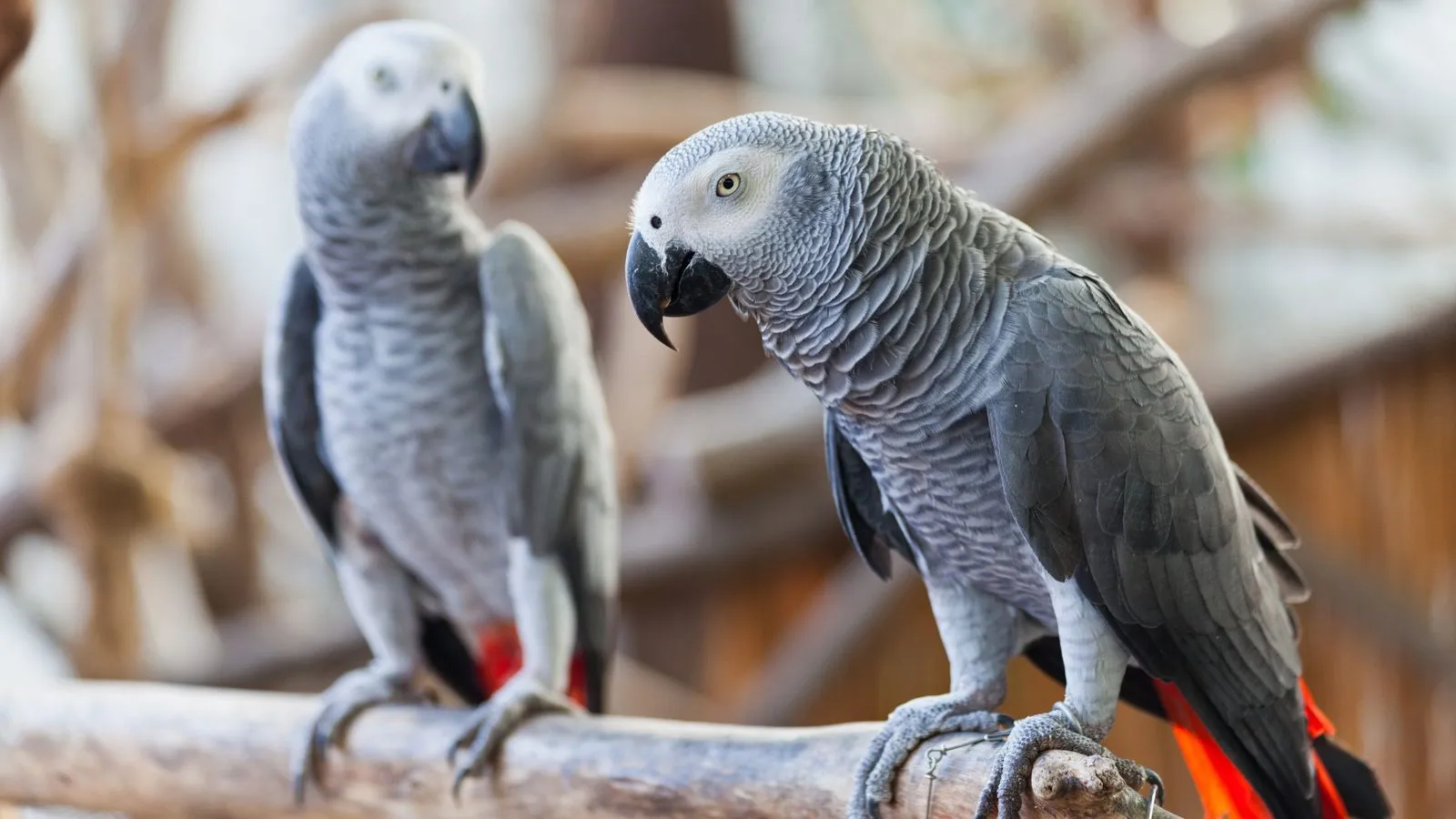
Being a vocal learner is not the same as understanding. Still, the late Alex, an African grey studied by researcher Irene Pepperberg, showed how far a parrot can go. By the end of his life, Alex could identify 50 objects, seven colors and six shapes. Audubon points out that his vocabulary, at about 100 words, was only average for a parrot, so it was not the number of words that made him stand out. Pepperberg has said that parrots who talk know what they are saying if they are taught appropriately.
A brain within a brain
Part of the answer lies in the parrot brain. In 2015, a Duke University team including neuroscientist Erich Jarvis published a study in the journal PLOS ONE showing that parrots have an unusual setup for learning sounds.
Many birds that learn their songs have brain centers, called cores, that control vocal learning. Parrots have those cores, but each one is also wrapped in an outer ring, called a shell, that is involved in vocal learning too. Before this study, some scientists had assumed the surrounding regions played no part. The Duke team suggested that the whole vocal-learning pathway had been duplicated in parrots, giving them what Jarvis described as a mirrored song system surrounding another one.
The researchers studied the budgerigar and eight other parrot species, including conures, cockatiels, two kinds of Amazon parrot, a blue and gold macaw, a kea and an African grey. Even the kea of New Zealand, the most ancient species they looked at, had a shell. That suggests the shell first appeared at least 29 million years ago. The shells were relatively bigger in the species best known for imitating human speech.
Fitting in with the flock
A brain that can copy sounds explains how parrots talk. The reason why seems to be social. Parrots naturally try to fit in, whether among other parrots or among people. In the wild, they use their voices to share important information and stay part of the flock.
Living in a group matters a great deal to a parrot. Pepperberg told Audubon that a single bird in the wild is a dead bird, because it cannot look for food and watch for predators at the same time. In a flock, the birds can share those jobs.
The same urge works in a living room. As Slate’s Explainer column put it, parrots are trying to fit in with the flock, and they will say whatever it takes. A parrot that gets attention or treats when it makes humanlike noises also has an extra reason to keep practicing words and phrases.
Why wild parrots do not talk
Wild parrots do not pick up human speech, because they are rarely close enough to people to hear it. Instead, as parrot researcher Timothy Wright told Audubon, they focus on other parrots for what they want to learn.
That learning creates something like local accents. Wright and his collaborators were the first to document vocal dialects in a wild parrot population. Yellow-naped Amazon parrots in Costa Rica, for example, have regional dialects. Wright’s lab found that these patterns stayed stable over time and came from birds actively learning a new dialect when they came into contact with it, not simply from groups being cut off from each other. According to Slate, research suggests parrots use these dialects to tell members of their own group from members of rival groups.
One experiment described by Slate shows how strong the pull of a dialect can be. A group of parrots from one Costa Rican flock was moved to a flock farther north that used different calls. About half flew straight back home. The rest stayed and formed their own little enclave with their own dialect, and one even learned the local calls and settled in with its new neighbors.
A talent with a purpose
So the chatty parrot on a perch is doing what its wild relatives do in the treetops. It listens, copies and tries to sound like the group it lives with. In a forest that group is a flock of parrots. In a home, it is us.