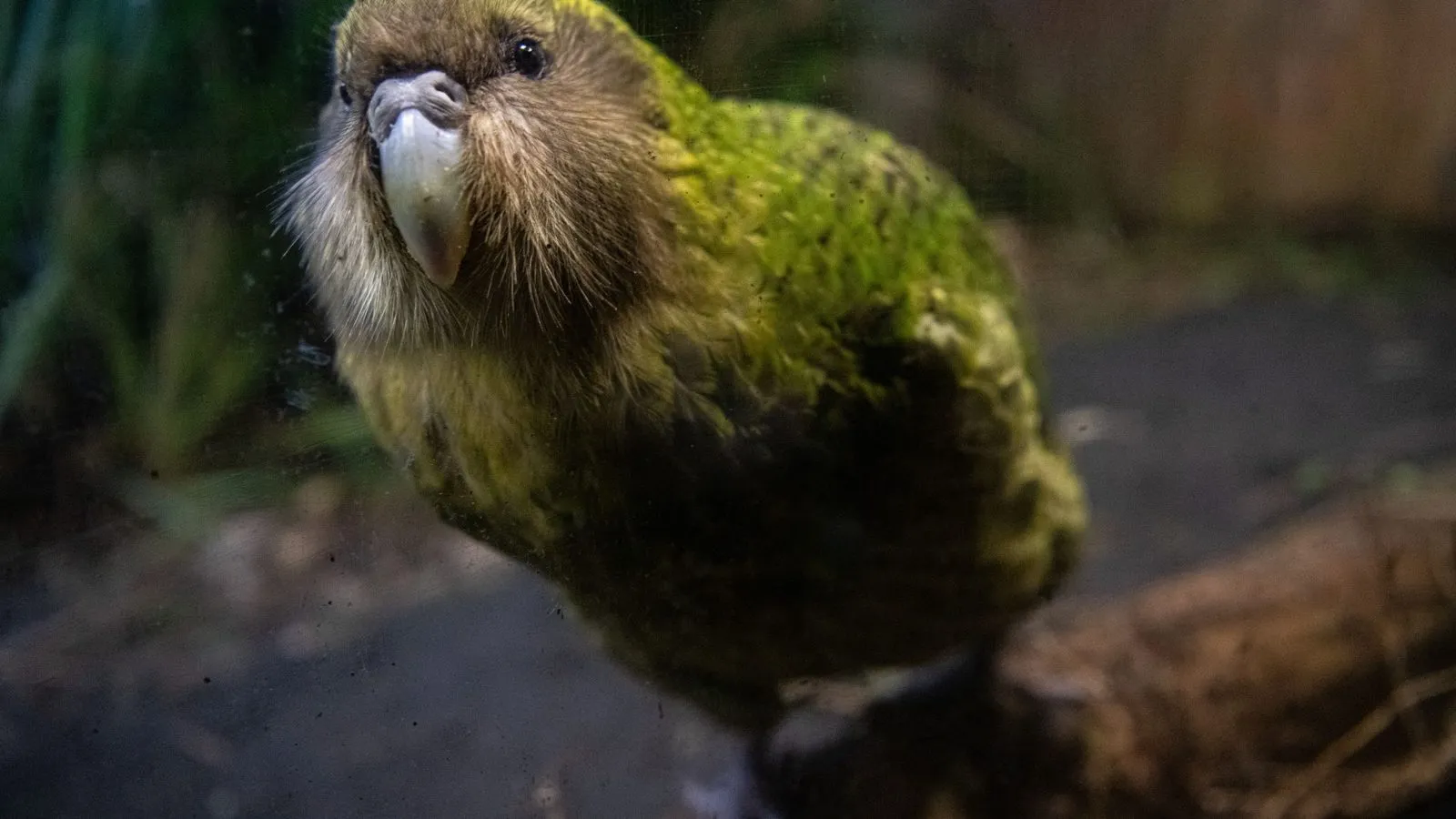
The kakapo is a parrot that cannot fly, comes out at night and may live longer than any other bird. Until now, every kakapo has been given its own name. On September 1, 2026, New Zealand’s Department of Conservation announced the official population had reached 325 birds, the highest it has been in the modern recovery effort.
A parrot unlike any other
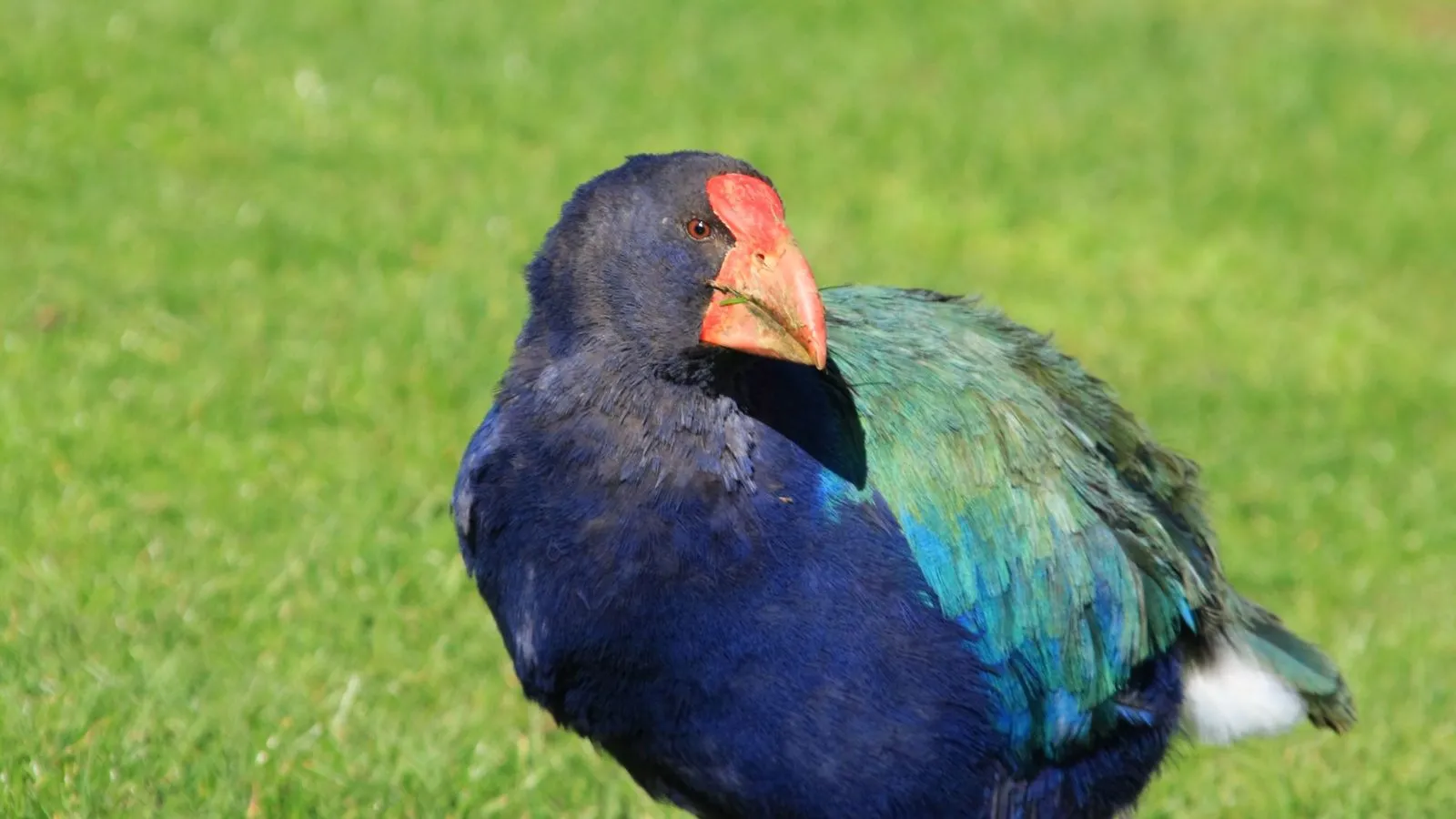
The kakapo, written kākāpō in New Zealand, is a large, moss-green parrot with an owl-like face and a waddling walk. It is the heaviest parrot in the world, with males weighing up to 4 kg. It may also be the longest-lived bird species, living 60 to 90 years.
Kakapo evolved without mammals around, and over time they grew heavy and lost the ability to fly. Their wings now help with balance, although lighter females can glide across gaps of 3 to 4 m. They are strong climbers and use their claws to scale rimu trees 20 m tall. They eat only plants.
When something startles a kakapo, it freezes and relies on its mottled feathers to blend into the forest. That worked well against predators that hunted by sight, such as the now-extinct Haast’s eagle. It works badly against cats and stoats, which hunt by smell, and kakapo have a distinctive smell.
Booming in the dark
The kakapo is the only parrot in the world known to breed on a lek, a gathering spot where males show off for females. Each male digs shallow bowls in the earth on a ridge or hilltop, puffs up an air sac in his chest and gives a deep, low boom every 1 to 2 seconds. The sound can carry hundreds of meters. He may keep it up for eight hours a night for two or three months.
Kakapo do not breed every year. They only nest when rimu trees produce a huge crop of fruit, which happens once every two to four years. Females raise their chicks alone, laying one to four eggs that hatch after about 30 days.
From widespread to a handful
Kakapo were once found across New Zealand. After people arrived, hunting, introduced predators and the loss of forest drove their numbers down. Efforts to protect them began as early as 1894, but by the mid-1900s the species had nearly vanished.
By 1976 the only known kakapo were 18 birds in Fiordland, and all of them were males. The next year, a population of about 150 was discovered on Stewart Island, but cats there were killing over 50% of the monitored grown birds each year. Between 1980 and 1992, the 61 remaining Stewart Island birds were moved to predator-free islands. In 1996 the IUCN Red List listed the kakapo as Extinct in the Wild. By 2000 it was back on the list as Critically Endangered, the category it still holds in its latest assessment from 2018.
The Kākāpō Recovery Programme started in 1995 with just 51 birds, only 20 of them female.
Why every kakapo has a name
With so few birds, each one matters, and each one is known personally. Every kakapo wears a small backpack radio transmitter so rangers can track where it is and how active it is. In 2015, a project began to sequence the genome of every living kakapo.
Names are part of that close care. Richard Henry, found in Fiordland in 1975, was the last surviving Fiordland bird, which made his genes vital for the whole population. He was named after a pioneering conservationist who tried to protect kakapo from predators more than 100 years ago, and he was thought to be around 80 years old when he died in 2010. Solstice was found on June 21, 1997, the winter solstice, and many of her descendants carry names inspired by the sky. In 2011 she had three chicks, including Ihi, which means “ray of sun” in Māori, and Kōmaru, which means “sun.”
Chicks receive their names on the anniversary of the day they hatched, but that is starting to change. A small number of chicks from 2026 will stay unnamed, the first unnamed kakapo in modern recovery history. The recovery team sees it as a sign that the species is slowly moving toward a more natural future.
A record year
The 2026 breeding season set a record. Ninety chicks were added to the official count once the youngest surviving chick reached 150 days old, the age at which young kakapo are considered independent. In the early years of the recovery program, it took 16 years to produce that many chicks. The population is thought to have last topped 300 as long as 75 years ago.
All kakapo live in the wild, on predator-free islands and in a fenced sanctuary, and there is no place where the public can see one in person. There are three breeding populations, on Whenua Hou/Codfish Island and on Anchor Island and Chalky Island in Fiordland. Low genetic diversity still causes problems such as infertility and eggs that fail to hatch, so the work is far from over. After a four-year gap between breeding seasons, the team thinks the next one could come as soon as 2028.