The red wolf is the world’s most endangered wolf, according to the U.S. Fish and Wildlife Service. In 1980 it was declared extinct in the wild, and seven years later biologists set captive-bred wolves loose in North Carolina, the first time a large carnivore declared extinct in the wild had been brought back in the United States.
America’s own wolf
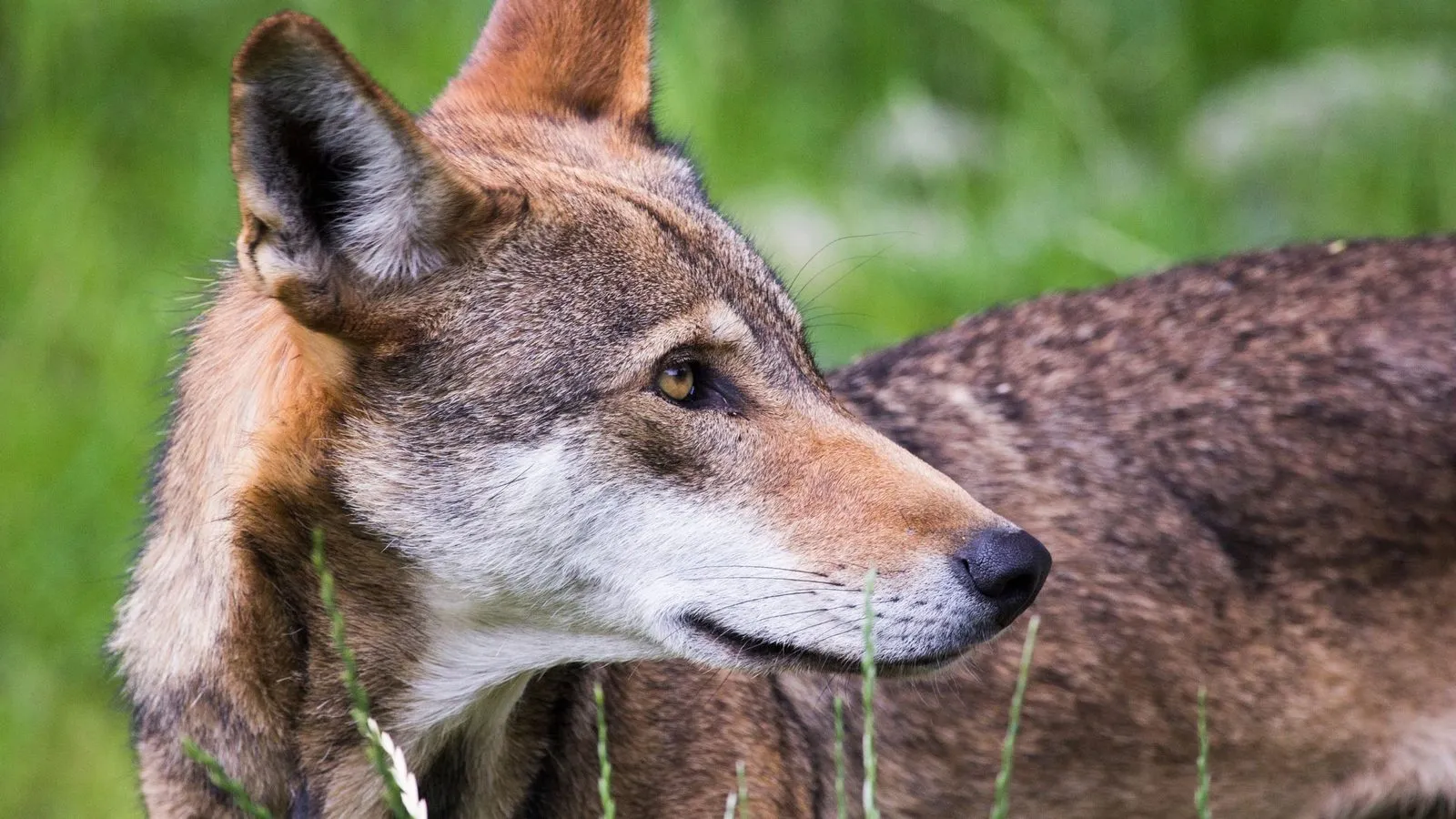
Red wolves are found only in the United States. They look a little like a mix between a gray wolf and a coyote: slimmer than a gray wolf, with long legs, tall pointed ears and a broad muzzle. Their coats are mostly brown and buff, with some black along the back and a reddish tint on the ears, head and legs.
An adult stands about 26 inches at the shoulder, measures about 4 feet from nose to tail tip and weighs 40-80 pounds (18-36 kilograms). Red wolves can run up to 30 miles per hour and swim for long periods. They are most active at dusk, dawn and through the night, and they usually avoid people.
They live in close family packs of five to eight animals: a breeding pair and their young from different years. Pairs tend to stay together for life and mate once a year in February. Pups are born in April or May, in dens tucked into hollow trees, stream banks or sandy knolls. A red wolf may travel up to 20 miles a day to find food, and a wolf eats two to five pounds of it daily, mostly white-tailed deer, raccoons, rabbits, rodents and nutria.
How they disappeared
The red wolf once ranged from Texas to New York. By the early 20th century, intensive predator control programs and the loss of its habitat had wiped out most of them. The species was first listed as threatened with extinction in 1967, and by 1972 the last red wolves clung on in a small coastal area of southeast Texas and southwest Louisiana.
Between 1973 and 1980, the Fish and Wildlife Service trapped the remaining wild canids to save the species. Point Defiance Zoo and Aquarium, working with the Service, started a captive breeding program using 14 red wolves. In 1980 the red wolf was declared extinct in the wild.
Coming home to North Carolina
In 1987, eight adult wolves from captivity were released on Alligator River National Wildlife Refuge in northeastern North Carolina. The next year, the first litter of red wolf pups was born in the wild there. Between 1987 and 1994, more than 60 adult red wolves were set free.
It worked. By the mid-1990s, the wolves were holding territories, forming packs and raising pups. By 2011 there were 89 radio-collared red wolves, and in 2012 the wild population was estimated at as many as 120. The program became a model for later comebacks, including gray wolves in Yellowstone, Mexican wolves, California condors and black-footed ferrets.
A second release site, in Great Smoky Mountains National Park, did not last. It ended in 1998 because too few pups survived and the wolves could not settle into home ranges in the park.
A second crash
After 2012 the numbers fell fast. Gunshots and collisions with vehicles have been the main cause, and breeding with coyotes made the losses worse. By the end of 2020, the wild population was estimated at just 17-20 wolves.
Biologists have tried new tricks to turn things around. One is pup fostering, which began in 2002. Pups born in zoos are slipped into the den of a wild mother within a few weeks of birth, rubbed with her own pups so they share the same scent. A wild red wolf mother has never rejected a fostered pup when the team’s methods are followed. In 2026, staff from the Saint Louis Zoo flew three pups to Alligator River and swapped them into a wild litter, even though the pups were eight days apart in age, the largest gap ever tried. The foster worked.
All captured wild wolves now wear bright orange collars so that people can tell them apart from coyotes, which can be hard to do in the field.
Where things stand
There is still only one wild population of red wolves, spread across five counties of the Albemarle Peninsula in eastern North Carolina. As of August 2026, the Fish and Wildlife Service counted 21 known, collared wild wolves, with a total estimate of 22-23 adults and young adults plus 14-15 pups. Four wild litters in 2026 produced 23 pups, though only about 50% of red wolf pups in the wild survive.
The bigger group lives in zoos and conservation centers. The captive population, managed by the Association of Zoos and Aquariums as one population spread across the country, stood at 295 wolves. In the 2024-2025 breeding season alone, 29 pairs produced 43 pups in 12 litters. These animals are the reserve that keeps the species alive and supplies wolves for release.
The Smithsonian’s National Zoo describes the red wolf as critically endangered and among the rarest mammals in the world. Anyone lucky enough to see one in North Carolina is asked to stay at least 100 yards away, so the wolves do not get used to people or cars.