Some animals have been so close to extinction that every single survivor could be counted, and yet they are still here today. Each recovery took decades of work, from captive breeding and careful releases to protecting habitat and stopping hunting. Here are four animals that came back from the brink, and one more that shows how easily a comeback can slip away.
California condor
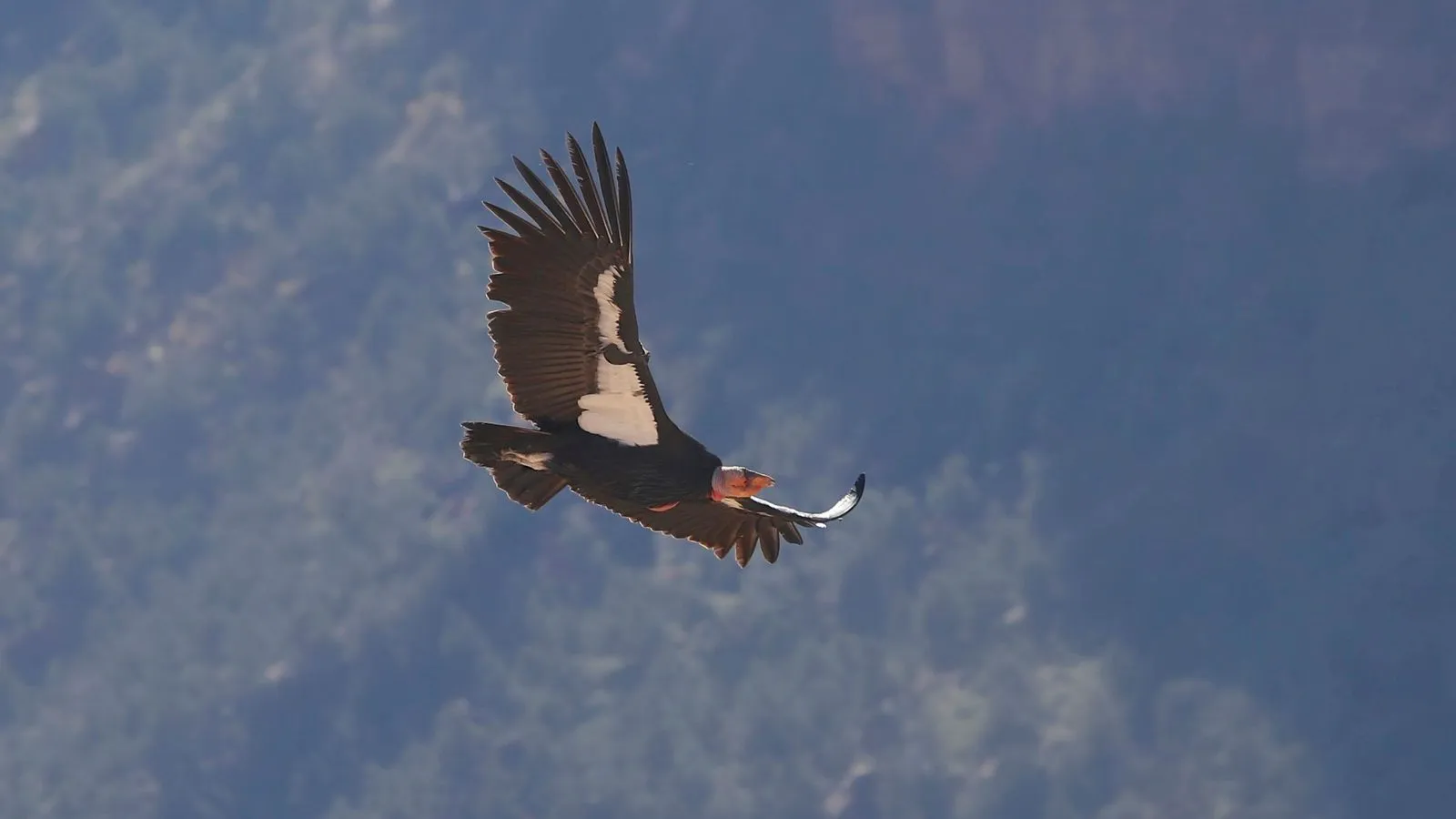
The California condor is the largest land bird in North America, with a wingspan of 9.5 feet and a weight of up to 25 pounds. By 1982, only 23 condors were left in the world. To save the species, all the remaining wild condors were caught and placed in a captive breeding program by 1987, leaving none in the sky.
Releases of captive-bred birds began in 1992, and in 2004 the first chick hatched in the wild. By the end of 2025, the U.S. Fish and Wildlife Service counted 607 condors, 392 of them flying free, and 16 chicks fledged in the wild that year. The biggest danger now is lead poisoning from the lead that hunters leave behind in the carcasses condors eat, which has killed 161 wild condors since 1992.
Iberian lynx
In 2001, only 62 grown Iberian lynx were left. Its survival depends on the European rabbit, its main prey, which is itself endangered and vulnerable to virus outbreaks.
Conservationists worked to bring back rabbits, restore Mediterranean scrub and forest, and cut deaths caused by people. They bred lynx in captivity and moved animals between areas to widen the gene pool, and since 2010 more than 400 lynx have been released into parts of Portugal and Spain. By 2022, there were 648 mature lynx and more than 2,000 in total, counting young animals. In June 2024 the IUCN moved the species from Endangered to Vulnerable and called it the greatest recovery of a cat species ever achieved through conservation. Road deaths and poaching remain threats.
Arabian oryx
The Arabian oryx is an antelope found only on the Arabian Peninsula, where it is known as Al Maha. Hunting wiped out the wild population, and the last wild oryx is believed to have been shot in 1972.
Animals kept in captivity saved the species. Captive breeding and reintroduction slowly rebuilt herds in the desert. By 2011, the wild population had reached 1,000, and the IUCN moved the oryx from Endangered to Vulnerable. It was the first time a species once listed as Extinct in the Wild had improved by three Red List categories. The Environment Agency-Abu Dhabi called it a true conservation success story.
Kakapo
New Zealand’s kakapo is a heavy, flightless, nocturnal parrot. After people arrived, hunting, introduced predators and habitat loss drove it close to extinction. When the Kākāpō Recovery Programme began in 1995, there were just 51 birds, and only 20 of them were female.
Today every kakapo wears a small radio backpack so rangers can track it, and all of them live on protected islands or in a fenced sanctuary. The hard work has paid off. On September 1, 2026, New Zealand’s Department of Conservation added 90 chicks to the official count, bringing the population to 325, the highest of the modern recovery effort.
Mauritius kestrel
The Mauritius kestrel is a small falcon found only on the island of Mauritius, where it hunts geckos in the forest. In 1974, only four wild birds were known. Rescuers bred kestrels in captivity, released them, put up nest boxes, guarded nests, gave extra food and controlled predators. By the end of the 1990s, there were probably 350 to 500 birds, a spectacular recovery.
The story did not end there, though. Releases stopped in 1994, and since the late 2000s the kestrel has been declining again. Invasive plants and introduced predators such as rats, monkeys, mongooses and cats are to blame, and less than 2% of the island’s original forest remains. By 2018 there were fewer than 250 birds, and the species is now listed as Endangered. Experts recommend restarting captive breeding, a reminder that saving a species is rarely a job that ends.
Article Sources
- Iberian lynx rebounding thanks to conservation action | IUCN
- A grain of hope in the desert | IUCN
- California Condor | U.S. Fish & Wildlife Service
- California Condor Recovery Program 2025 Annual Population Status | U.S. Fish & Wildlife Service
- Mauritius Kestrel Species Factsheet | BirdLife International
- Kākāpō population reaches new milestone | Department of Conservation
- Kākāpō | Department of Conservation