Pangolins are trafficked more than any other mammal because two parts of their bodies, their meat and their scales, sell for high prices, mostly in Asia. The IUCN Pangolin Specialist Group estimates that the equivalent of more than 895,000 pangolins were trafficked around the world between 2000 and 2019.
What is a pangolin?
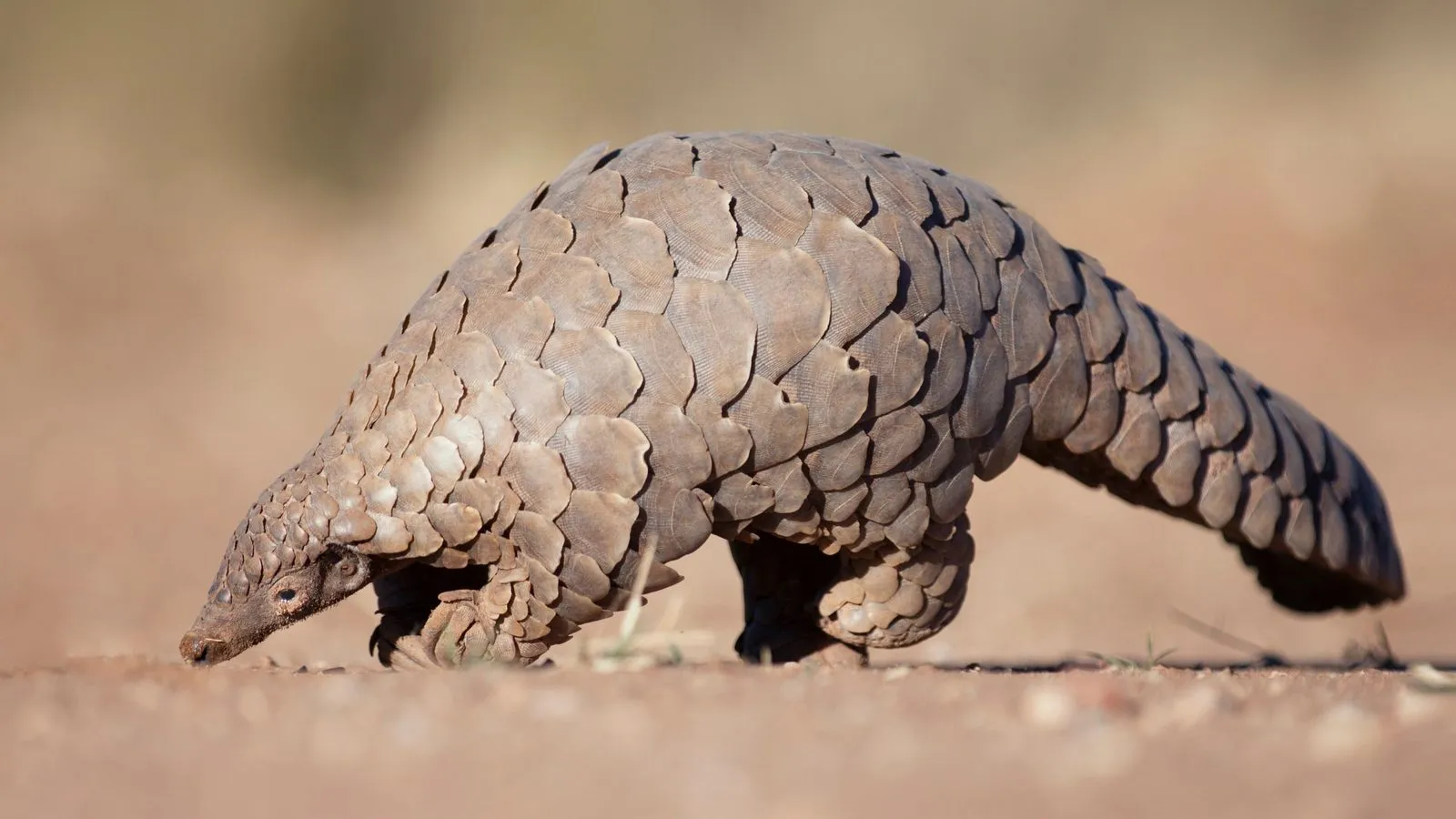
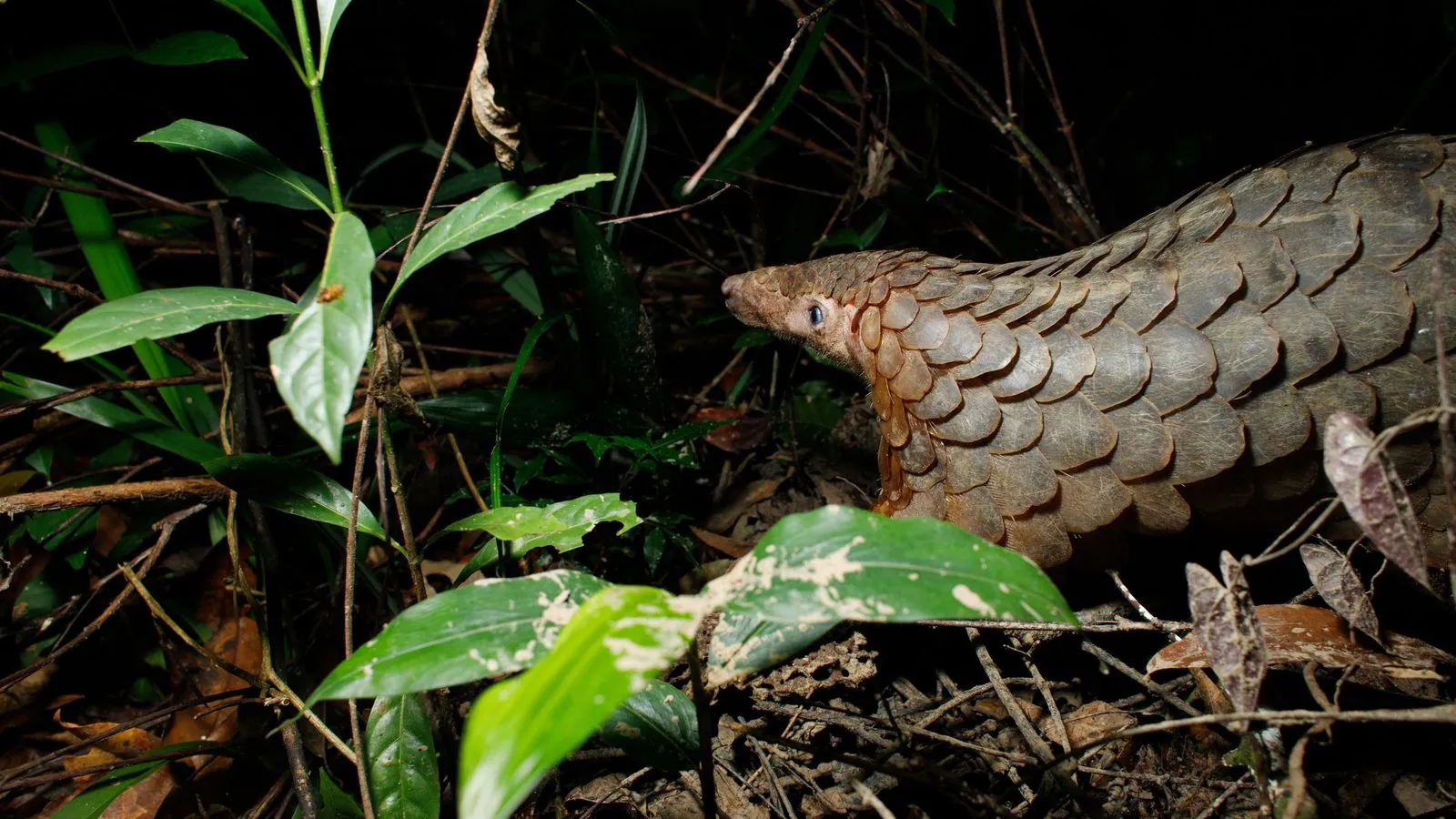
Pangolins are sometimes mistaken for reptiles, but they are mammals covered in hard, overlapping scales. They are also called scaly anteaters because they eat almost nothing but ants and termites. Most are solitary and come out mainly at night.
When a pangolin is startled, it covers its head with its front legs. If it is touched or grabbed, it rolls up into a tight ball, leaving only its scales on the outside. The IUCN recognizes eight species of pangolin. Four live in Africa: the black-bellied, white-bellied, giant and Temminck’s pangolins. Four live in Asia: the Indian, Philippine, Sunda and Chinese pangolins.
Why people want them
The first reason is meat. In China and Vietnam, pangolin meat is eaten as a delicacy. Because pangolins are expensive and seen as rare, some people serve them as a luxury to show off wealth and status, for example to impress business clients. In West and Central Africa, pangolins are eaten as wild meat, and at least 400,000 are hunted and eaten locally in Central Africa each year.
The second reason is scales. In traditional Asian medicine, especially in China and Vietnam, pangolin scales have been used for a long list of ailments. They are also used in traditional medicine in West and Central Africa. Yet pangolin scales are made of keratin, the same material as rhino horn and human fingernails, and there is no scientific evidence that they work as medicine.
There is a third, smaller market too. In the United States, there is demand for pangolin leather for boots, bags and belts.
How big the trade is
The numbers are staggering. WWF reports that more than 1,000,000 pangolins were trafficked over a 10-year period, and 2019 data suggest a pangolin is poached every three minutes. In 2019 alone, an estimated 195,000 pangolins were trafficked just for their scales.
The trade has spread to Africa. Since 2008, more and more African pangolin scales have been shipped from West and Central Africa to Asian markets. WWF estimates that 8.5 million pangolins were taken from the wild in that region for the illegal trade between 2014 and 2021. In one recent case, seven metric tons of scales were seized in Ogun state, Nigeria.
Seizures in Asia are huge as well. In February 2019, authorities in Sabah, Malaysia, seized about 30 tonnes of Sunda pangolins, including frozen and live animals, skins and scales.
What it has done to pangolins
Pangolins are hard to count, so nobody knows exactly how many are left. But the declines are clear. In December 2019, the IUCN Red List updated all eight species. Three Asian species, the Chinese, Philippine and Sunda pangolins, are now Critically Endangered. The Indian, white-bellied and giant pangolins are Endangered, and the black-bellied and Temminck’s pangolins are Vulnerable.
The Sunda pangolin shows how fast the losses can come. It was listed as Endangered in 2008. By its 2019 assessment, its populations were thought to have fallen by 80% in just 21 years because of hunting and poaching, and it was moved up to Critically Endangered. In some places in China and Southeast Asia, heavy hunting has left pangolins commercially extinct, too scarce to be worth trading, or wiped them out of some sites altogether.
The laws meant to stop it
Pangolins have been protected on paper for decades. All species were added to CITES Appendix II, the list for closely regulated trade, in 1995. In 2000, export quotas for wild Asian pangolins were set at zero. In 2016, every pangolin species was moved to Appendix I, which bans international commercial trade in wild pangolins and their parts.
Even so, the IUCN specialist group says illegal hunting and trade continue seemingly unabated. There have been some wins. Since 2020, China has given its native Chinese pangolin the highest level of protection and no longer allows pangolin scales to be used in traditional medicine. Seizures of scales in China have dropped sharply thanks to stronger enforcement and public awareness.
The fight has also moved online. WWF, TRAFFIC and IFAW run the Coalition to End Wildlife Trafficking Online, which works with over 40 tech companies to find and block illegal wildlife listings, including pangolin products. WWF is also working to reduce demand for illegal wildlife products in China and Vietnam, the main markets for pangolin meat and scales.