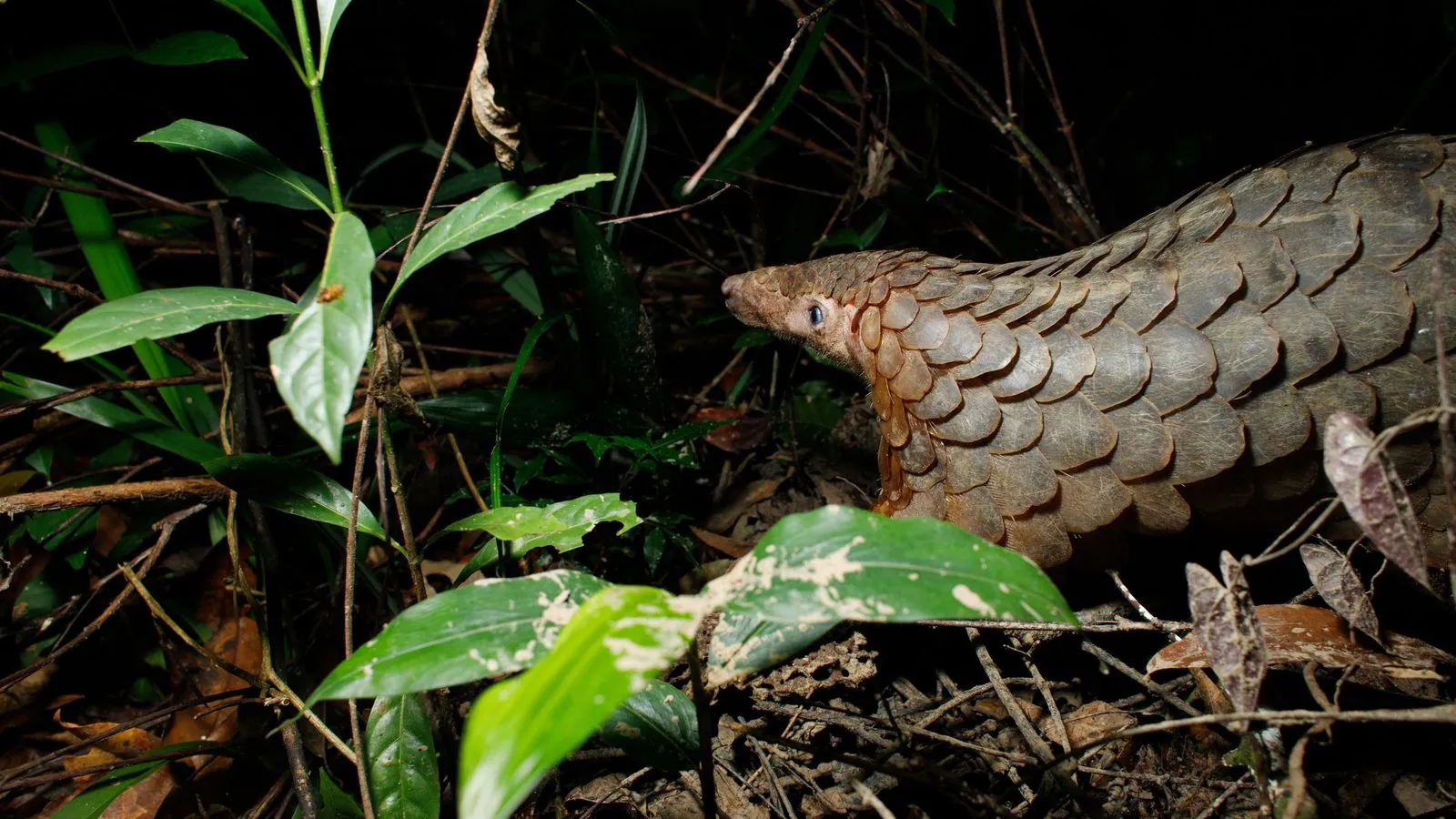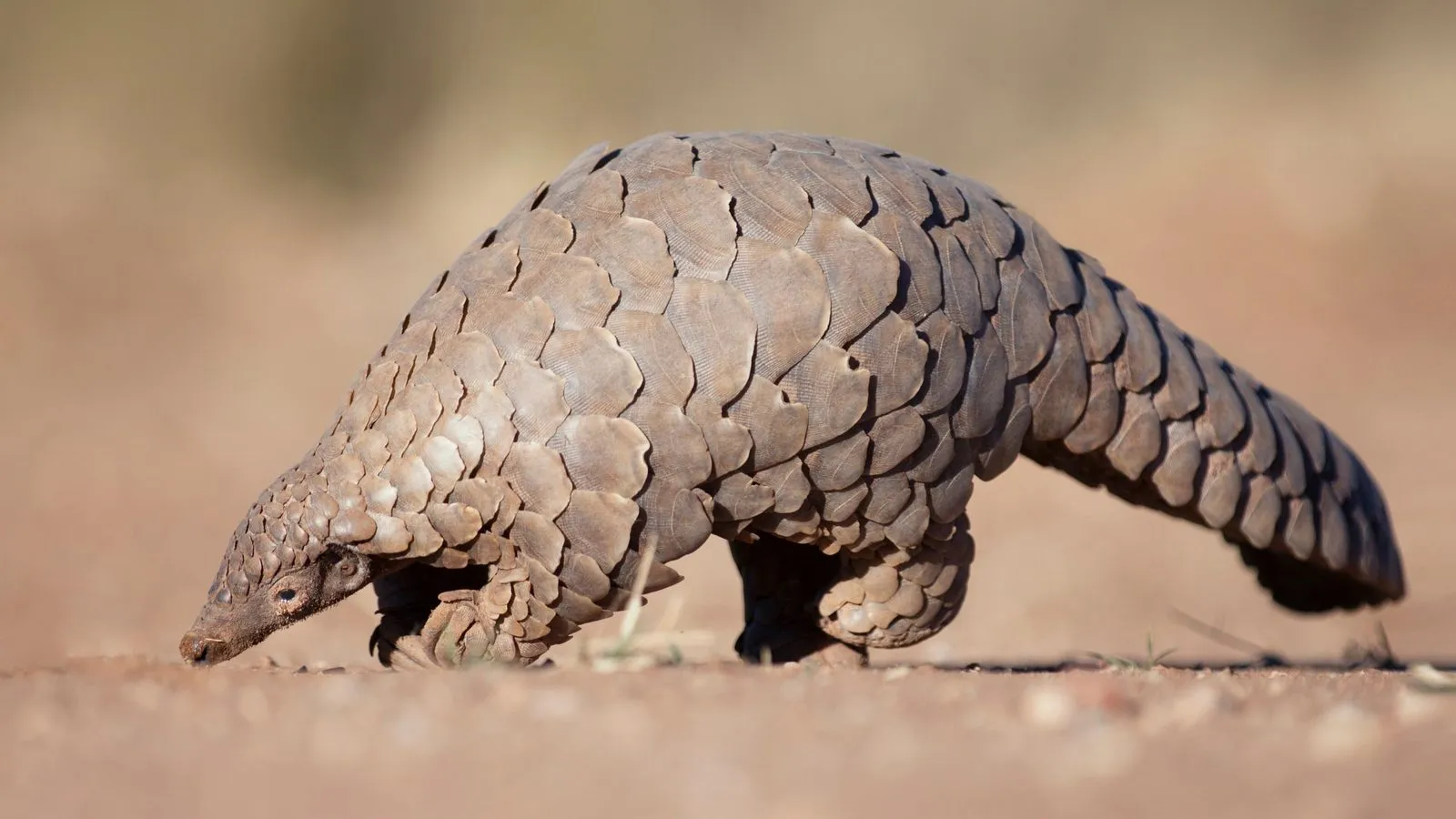
The pangolin is the world’s only truly scaly mammal, wrapped in overlapping armor made of keratin, the same material as your fingernails. When it is threatened, it rolls into a tight ball. That trick works well against a hungry predator, but it is no help against people, and pangolins are now the most trafficked wild mammals in the world.
Armor made of fingernail
The IUCN SSC Pangolin Specialist Group describes pangolins, also known as scaly anteaters, as unique mammals covered in hard scales made of keratin. According to the African Wildlife Foundation, those scales make up 20 percent of a pangolin’s total body weight. The scales are not just a shield. If anything is pushed between them, a pangolin can make a cutting motion with its scales.
The armor has one gap. A pangolin’s belly and underside are not covered in scales. So when it is threatened, it rolls into a tight ball to shield its soft underparts, leaving only the hard scales facing out.
Built to eat ants
Pangolins feed almost entirely on ants and termites, and they have no teeth. Instead, the African Wildlife Foundation explains, they rely on a gizzard-like stomach adapted for grinding food. To catch their prey they use long, sticky tongues that can extend up to 40 cm (16 inches), long enough to reach insects burrowed underground. The conservation charity IFAW estimates that a single pangolin can eat 70 million insects a year.
Ants usually come first. One study of Sunda pangolins found they spent 67% of their foraging time on ants and 33% on termites. They also eat ant larvae, bee pupae, flies, worms, crickets and other insect larvae.
Most pangolins are active at night and live alone except when breeding. The Sunda pangolin of Southeast Asia shows how varied their lives can be. It is an adept climber, and its prehensile tail makes an excellent climbing aid as it heads up trees to raid ant nests. It sleeps in hollows in or at the base of trees, and sometimes digs burrows in the soil. By digging into burrows, ant nests and termite mounds, Sunda pangolins are thought to aerate the soil and help recycle nutrients.
Baby pangolins
Pangolins breed slowly, and a mother usually has a single baby. Pregnancy length varies by species. IFAW gives a general range of 70 to 140 days. In Temminck’s ground pangolin of Africa it lasts 105 to 140 days, while the Sunda pangolin carries its young for about 180 days.
Baby pangolins, sometimes called pangopups, are born covered in soft, white scales that harden after a couple of days. Before long the youngster is riding around on its mother’s back, clinging to her scales.
Growing up takes time. A young Temminck’s pangolin typically stays with its mother for 3 to 6 months and starts heading off on its own at about one year old. Twins are rare, and females of that species may give birth only every second year.
Eight species on two continents
The eight living species are split evenly, four in Asia and four in Africa, and they live in very different places.
Temminck’s ground pangolin is the most widespread African species. It ranges from southeastern Chad and South Sudan through much of East Africa and southern Africa, reaching South Africa, Namibia and southern Angola. It lives mainly in savannas and woodlands and on rocky slopes up to 1,700 m, but never in forest or true desert. What it needs most is plenty of ants and termites, plus dens or debris to shelter in.
The giant ground pangolin lives across West and Central Africa, from Senegal eastward, in rainforest, swamp forest and wooded savanna, from sea level on the coast of Gabon to at least 2,200 m. It is solitary and active at night, and spends the day resting under piles of plant debris, in thickets, under fallen tree roots, in partly opened termite mounds or in burrows. Both males and females have been seen marking with scent.
Threatened and trafficked
All eight living pangolin species, four in Asia and four in Africa, are listed in a threatened category on the IUCN Red List. They are hunted for their meat and for their scales, which are used in traditional remedies even though there is no scientific evidence for the benefits claimed, and that trade has made pangolins the most trafficked wild mammals in the world.
Article Sources
- Pangolins | IUCN SSC Pangolin Specialist Group
- Manis javanica (Sunda Pangolin) | IUCN Red List
- Pangolin facts: Learn about the world's most trafficked mammal | IFAW
- 5 Things You Didn't Know About the Pangolin | African Wildlife Foundation
- Smutsia temminckii (Temminck's Ground Pangolin) | IUCN Red List
- Smutsia gigantea (Giant Ground Pangolin) | IUCN Red List