Extinct does not always mean gone for good. Every so often, an animal that scientists had written off turns up alive, sometimes after decades and once after what was thought to be 70 million years. Biologists sometimes call these comebacks Lazarus species. Here are five of the most remarkable.
The coelacanth
Coelacanths were known only from fossils and were thought to have died out 70 million years ago. Then, on 22 December 1938, Marjorie Courtenay-Latimer, curator of the East London Museum in South Africa, spotted a strange fish in a fishing catch. It was 1.5 meters long, with steel-blue scales and fleshy, limb-like fins. The fish expert J.L.B. Smith confirmed it was a living coelacanth and named it Latimeria chalumnae after her.
A second specimen came only in 1952, from the Comoro Islands, about 2,000 kilometers away. Local fishermen there already knew the fish as gombessa and caught two or three a year. The West Indian Ocean coelacanth can reach two meters and 100 kilograms. It hides in caves by day and hunts at night.
The takahē
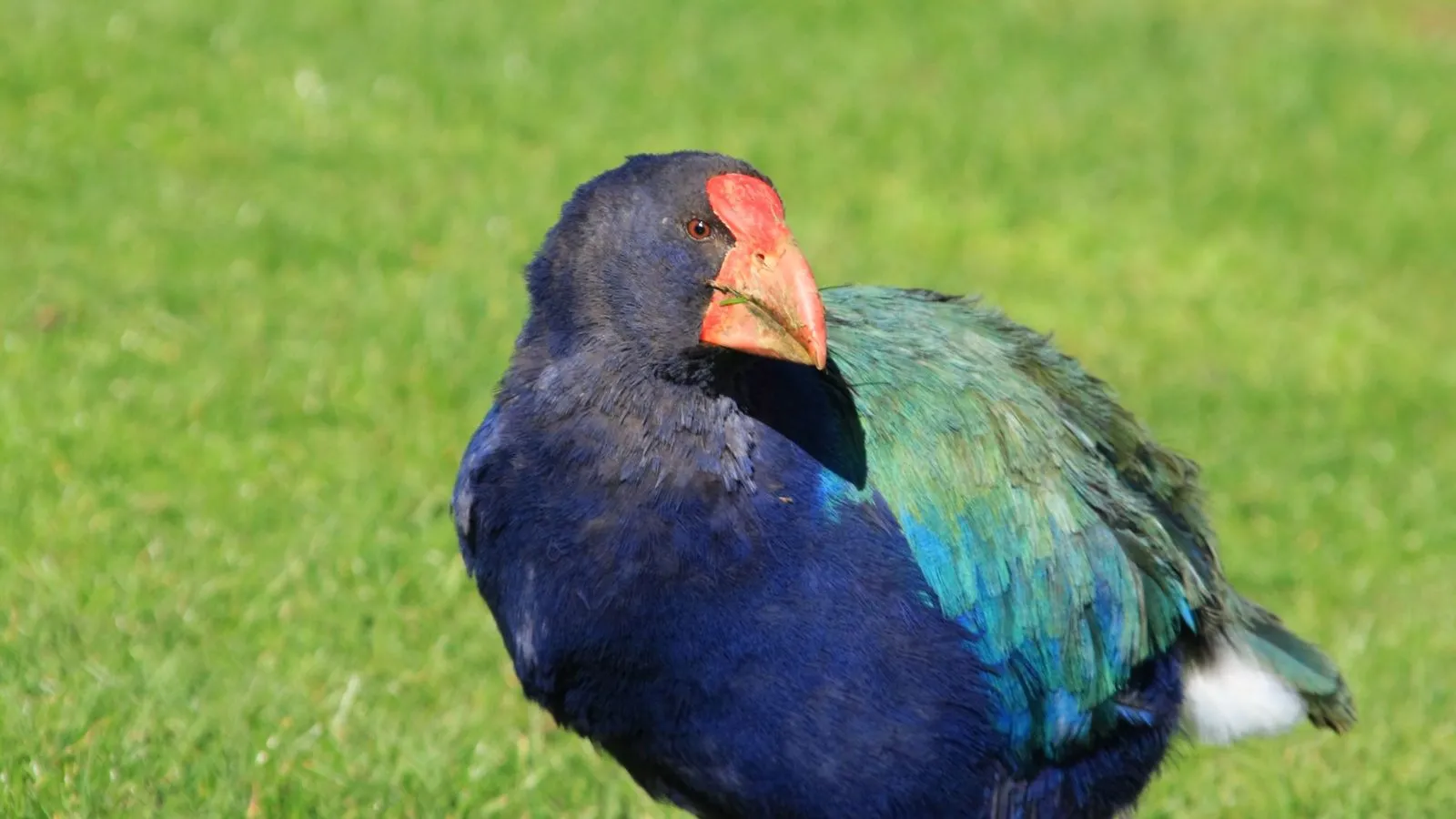
The takahē is a chunky, flightless bird from New Zealand’s South Island and the largest living member of the rail family. It weighs about 2.3 to 3.8 kilograms and has a bright red beak and feathers of royal blue, turquoise and olive green.
Hunting, introduced predators and habitat loss pushed it into decline, and it was presumed extinct for nearly 50 years. In 1948, Geoffrey Orbell, a doctor from Invercargill, and his party found the last wild population high in the tussock grasslands of the Murchison Mountains in Fiordland.
Its rescue became New Zealand’s longest-running endangered species program. Even so, a plague of stoats in 2007 halved the Murchison Mountains population. By 2023, numbers had reached around 500 birds, and takahē were returned to a second wild site. The species is still classed as Nationally Vulnerable.
The Lord Howe Island stick insect
This big, flightless stick insect, nicknamed the tree lobster, was once common on Lord Howe Island, between Australia and New Zealand. Things changed after a supply ship ran aground there in 1918 and black rats got ashore. After 1920, no stick insects could be found, and the species was declared extinct in 1986.
In 2001, a tiny population was found on Ball’s Pyramid, a towering volcanic sea stack about 20 kilometers away. One count found just 24 insects. In 2003, two breeding pairs were collected, and one went to Melbourne Zoo, which had bred more than 9,000 by 2012.
A 2017 genetic study compared the Ball’s Pyramid insects with old museum specimens from Lord Howe Island. The DNA differed by less than 1%, confirming they were the same species.
Wallace’s giant bee
Wallace’s giant bee is the world’s largest bee, with a wingspan of more than six centimeters. The female is about as long as a human thumb and has huge jaws. It was first collected on the Indonesian island of Bacan by Alfred Russel Wallace, the naturalist who came up with the theory of evolution by natural selection alongside Charles Darwin.
After an entomologist saw it in 1981, the bee was lost to science. In January 2019, a search team spent days checking termite nests in the North Moluccas. On the last day of a five-day stop, they found a single female living in a termite nest about 2.5 meters up a tree. Photographer Clay Bolt took the first photos and video ever made of a living one. Forest clearing for farming still threatens its home.
The Fernandina giant tortoise
For more than a century, the Fernandina giant tortoise was known from a single animal: a male collected on Fernandina Island in the Galápagos during an expedition in 1905-06. The island is dominated by an active volcano, and the species was believed to have been wiped out by eruptions.
In 2019, an expedition found a lone female, nicknamed Fernanda. Geneticists at Yale University compared her DNA with the old male’s and confirmed she belonged to the same species, last reported 112 years earlier. Rangers also found tracks and droppings from at least two other tortoises on the island.
Conservationists hope to find her a mate. They want to avoid repeating the story of Lonesome George, the last Pinta Island tortoise, who died in 2012. These comebacks show that searching is worth it, and that for some species, help arrives only just in time.
Article Sources
- Coelacanths: The fish that 'outdid' the Loch Ness Monster | Natural History Museum
- Takahē: NZ native land birds | Department of Conservation (New Zealand)
- Museum Genomics Confirms that the Lord Howe Island Stick Insect Survived Extinction | Current Biology 2017 (ANU research portal)
- AM Expedition: Lord Howe Island, 2017 | The Australian Museum Blog
- World's biggest bee found | The University of Sydney
- "Extinct" for 112 Years: Galápagos Giant Tortoise Rediscovery Confirmed | Galápagos Conservancy
- Lazarus taxon | Wikipedia
- Dryococelus | Wikipedia