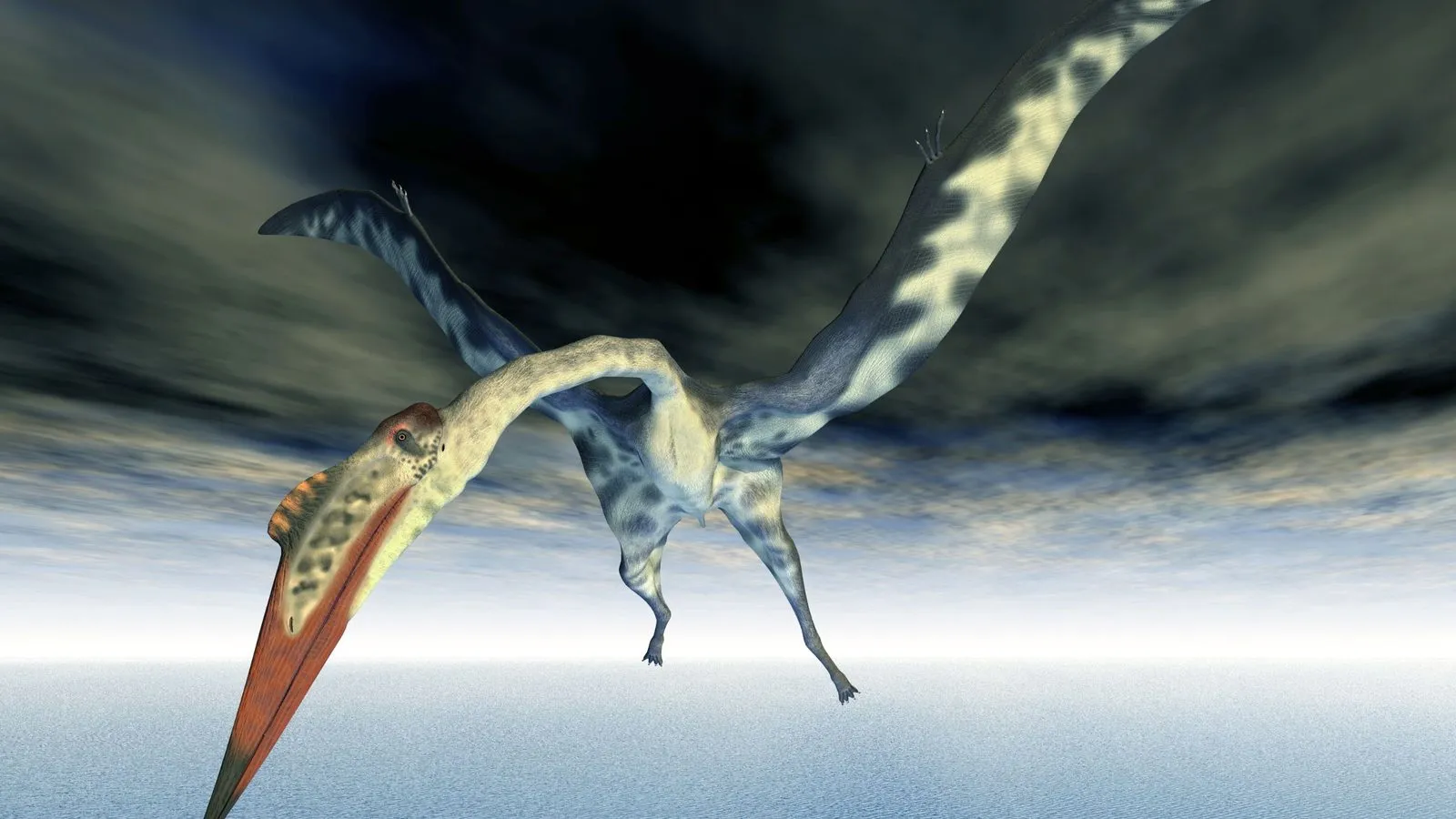
Quetzalcoatlus stood about 12 feet tall, roughly as tall as a giraffe, and its wings stretched around 11 meters from tip to tip. It is the largest flying animal known to have lived, and for decades scientists argued over how something that big could even get off the ground.
A flying reptile, not a dinosaur
Quetzalcoatlus was a pterosaur, a member of the group of flying reptiles that lived alongside the dinosaurs. Pterosaurs were close relatives of dinosaurs but not dinosaurs themselves. They were the first animals after insects to evolve powered flight.
About 70 million years ago, Quetzalcoatlus lived in what is now Texas, in inland marshes and open fields along the Rio Grande. The landscape was very different from the West Texas desert there today.
How big was it?
Size estimates for Quetzalcoatlus have swung wildly over the years, from 5.2 meters to 25.8 meters across the wings. That is partly because the largest specimen is known from only a few wing bones. More recent estimates settle at around 10 to 11 meters. Researchers at the University of California, Berkeley, give a wingspan of 37 to 40 feet, while London’s Natural History Museum gives around 11 meters, about the wingspan of a small airplane.
Standing on the ground, it was about 12 feet tall. Its legs were around 6 feet high at the hip, it had a neck of about 6 feet and a crested skull about 4 feet long. Berkeley paleontologist Kevin Padian compared the overall look to a stork on steroids. For comparison, a large heron today stands about 4 feet tall.
Unlike the serpent god it was named after, Quetzalcoatlus had no feathers. Like other pterosaurs, its body was covered with hair, and its wings were made of skin and fibers of keratin. It had no tail and no teeth.
Found in Big Bend
The first Quetzalcoatlus fossils were discovered in Big Bend National Park, Texas, in the 1970s by Douglas Lawson, then a 22-year-old master’s student in geology at the University of Texas at Austin. He named the animal after the Aztec flying serpent god, Quetzalcoatl, and the species Quetzalcoatlus northropi was named in 1975.
Many smaller pterosaur bones turned up in the park too, about 300 fossil pieces in all, but they went largely unstudied for decades. The paleontologist Wann Langston gathered experts to work on them but died in 2013 before a full description could be published.
In 2021, scientists finally published a set of papers on the animal as a special memoir of the Society of Vertebrate Paleontology. They named the smaller species Quetzalcoatlus lawsoni after its discoverer. It had a wingspan of around 4.5 meters and lived around 69 million years ago. A third, smaller pterosaur from the same area, Wellnhopterus brevirostris, had a wingspan of three meters.
A giant heron of the wetlands
Earlier ideas had Quetzalcoatlus scavenging carcasses or plucking fish from the water like a pelican. The 2021 work rejects both. Its jaws were long, thin and toothless, which Langston likened to chopsticks. They were too delicate for tearing meat.
Instead, it probably fed like a giant heron or egret, wading and stalking through shallow water and plucking up crabs, worms, clams, small fish, lizards and other small animals, then swallowing them whole. It could lift its head straight up to swallow and swing its head and neck through an arc of 180 degrees, giving it a view all around.
The larger species probably hunted alone. The smaller one seems to have gathered in groups for at least part of the year, since fossils of more than 30 individuals were found at a single site.
How it took off
The biggest puzzle was takeoff. Some earlier researchers suggested Quetzalcoatlus was too heavy to fly at all, or that it ran to build speed. A running start does not work well, because its wings were so long. Padian’s team calculated that in the smaller species, a running animal could only push its wings about 40 degrees below horizontal before they struck the ground.
Their answer is a jump. The pterosaur probably crouched and then leaped with its strong back legs. If it could jump twice its hip height, to about 8 feet, or 2.5 meters, the wings would clear the ground and it could start flapping with full, deep strokes. Herons and egrets take off in a similar way.
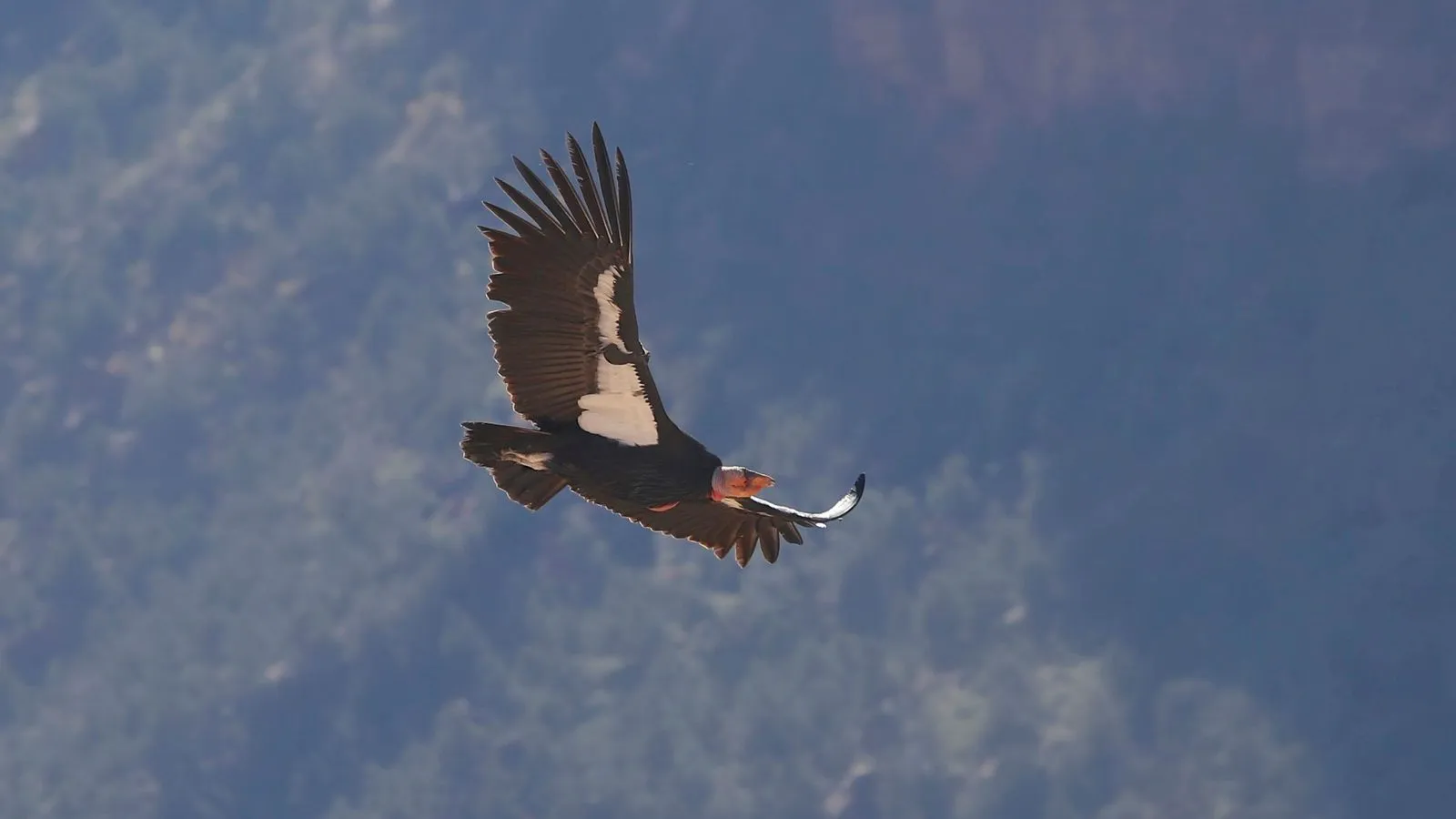
Once airborne, it was a capable flier. Pterosaurs had huge breastbones and large crests on the upper arm bone for anchoring powerful flight muscles. Quetzalcoatlus probably soared like a condor or vulture.
An awkward but quick walk
On the ground, its folded wings touched the ground, giving it a four-legged stance. It did not push itself along with its wings the way a vampire bat does. A bone in the shoulder blocked that movement. Instead, it lifted one arm, stepped forward with the leg on that side, put the hand back down, then repeated the move on the other side. It looks clumsy, but the animal could do it quickly and easily. Fossil pterosaur trackways found in France fit this gait.
Quetzalcoatlus and the other pterosaurs disappeared along with the dinosaurs, when a huge space rock struck what is now Mexico 66 million years ago.