Lose a finger and it is gone for good. Some animals play by different rules. They can rebuild legs, fins, skin and even pieces of the heart, and scientists study them closely in the hope of learning how they do it.
Planarian flatworms
Planarians are small flatworms, about a centimeter long, and they may be the champions of regrowth. Cut one into pieces and each piece can become a new animal, growing back a head or a tail as needed. The scientist Thomas Hunt Morgan found that a slice as small as 1/279th of a planarian could turn into a complete, fully grown worm.
The secret lies in cells called neoblasts. These are stem cells carried by the grown worm that share certain features with the stem cells of embryos, and they can build new tissues and organs. Researchers at the Whitehead Institute describe leaving chopped-up worms in a dish in the dark and finding fully formed planarians after about a week. Each chunk had become a new animal much like the one it was cut from.
Axolotls
The axolotl, a Mexican salamander, is the backboned star of regeneration research. The San Diego Zoo Wildlife Alliance notes that scientists have long studied its ability to regrow tissues and entire body parts, including limbs, tails and organs.
The Marine Biological Laboratory sums up what makes it remarkable: an axolotl can regrow a lost leg, a piece of its heart, parts of its spinal cord and even sections of its brain, with no scarring.
The axolotl may thrive in laboratories, but its future in the wild is far less secure. It is Critically Endangered and is found at only three isolated sites in the southern part of Mexico City.
Zebrafish
Zebrafish can rebuild an injured heart. Kenneth Poss, a cell biologist at Duke University Medical Center, described using very tiny scissors to remove about 20 percent of the ventricle, one of the fish’s pumping chambers. The wound first sealed with clots of red blood cells. Over the next two months, those clots were gradually replaced with new, working heart muscle cells.
The fish are just as good with fins. When a fin is surgically removed, a zebrafish regenerates a perfect copy within two weeks, complete with bone, nerves, blood vessels, connective tissue and skin. Zebrafish can also regenerate many other tissues, including the spinal cord and the retina at the back of the eye.
Sea stars
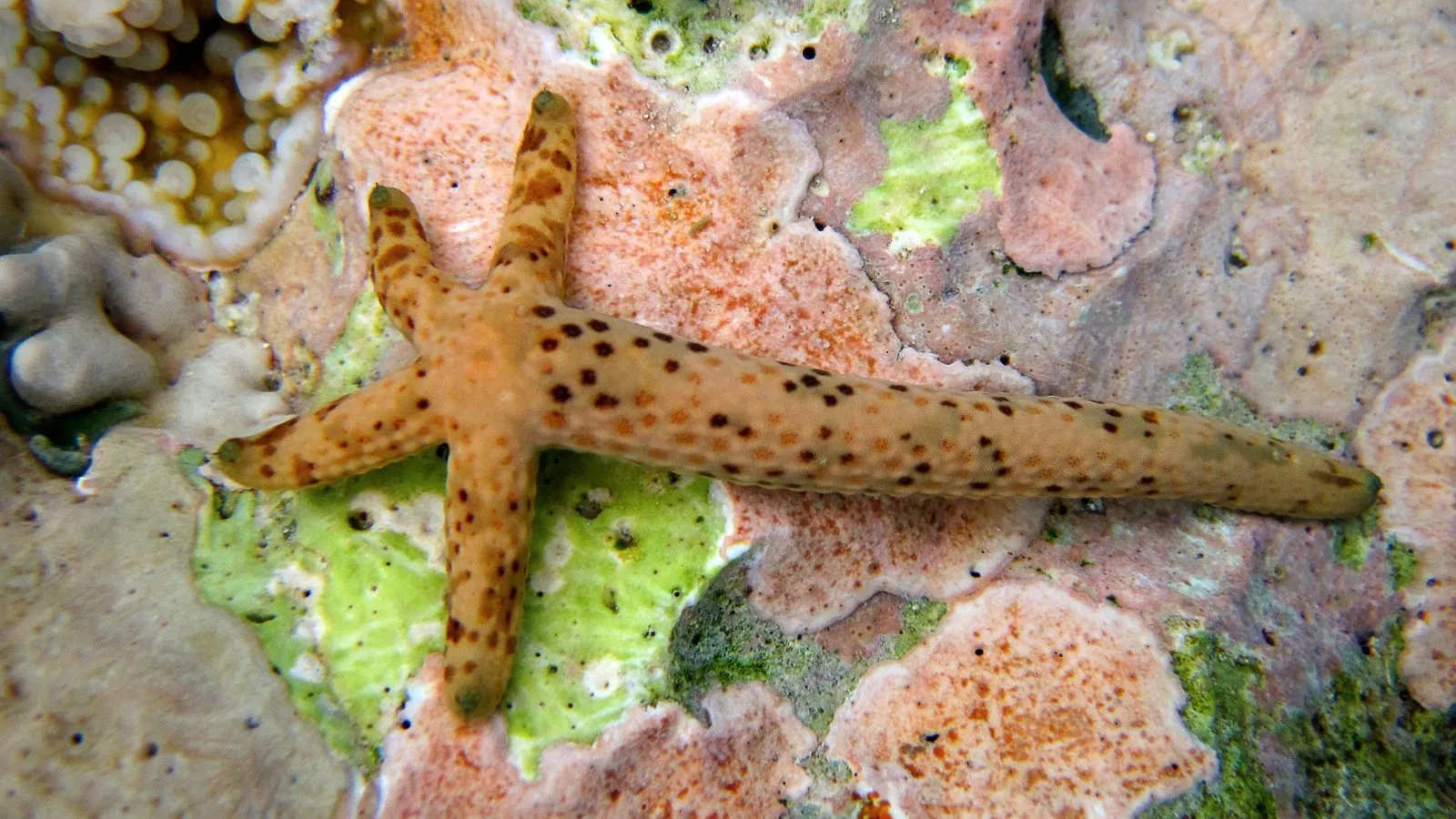
Sea stars are famous for regrowing arms. According to the Seattle Aquarium, a sea star can regrow a lost arm as long as some part of the central disk, the middle of its body, remains intact. The injured tissue seals off, and then special cells move in to rebuild the arm. The process can take a year or even longer.
A few sea stars go much further. Sea stars in the genus Linckia can drop off an arm that then regrows into a complete animal. While this happens they often look more like comets than stars. The old arm forms the tail of the comet, while 4 new arms slowly grow back to form a new, complete sea star.
African spiny mice
Most mammals heal a serious wound with a scar, which made the African spiny mouse a surprise. Ashley Seifert, then a postdoctoral researcher at the University of Florida, studied wild spiny mice in Kenya and found they had tear-away skin that let them slip out of a predator’s grasp.
In research published in the journal Nature in 2012, his team made 4 mm holes in the mice’s ears and watched them heal. Skin, hair follicles and cartilage all came back, Seifert said. The tissues regrew through structures like the ones that form when a salamander regrows a limb. On the back, the mice regrow skin and hair follicles, though not the muscle underneath.
Article Sources
- New tools for an old can of worms | Whitehead Institute
- Axolotl Fact Sheet | San Diego Zoo Wildlife Alliance Library
- The axolotl can regrow a lost leg, a piece of its heart, parts of its spinal cord | Marine Biological Laboratory
- Zebrafish's regenerative abilities make it unique tool to study disease | Duke Health
- Invertebrates | Seattle Aquarium
- From the field: in the sea, comets become stars | Florida Museum of Natural History
- UF biologist discovers mammal with salamander-like regenerative abilities | University of Florida